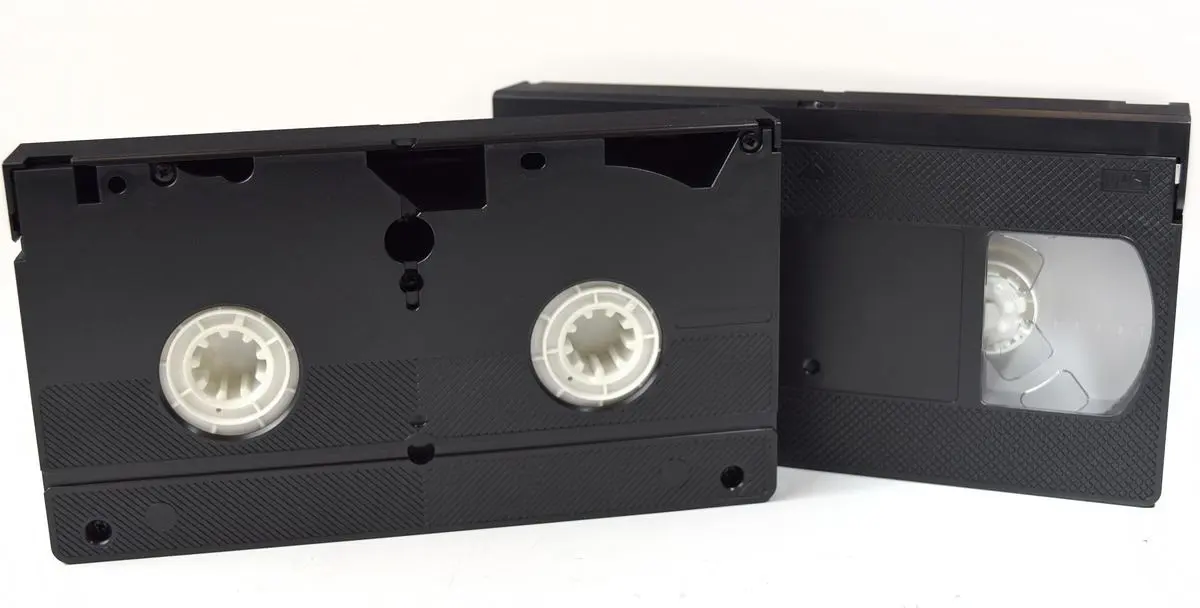
Wondering how your old tapes fit into the history of VHS and home video? In short, VHS beat Betamax in a format war, then DVD overtook it in US rentals in 2003.
This timeline is one chapter of the wider hobby, so see film collecting for beginners for the bigger picture.
| Item | Value |
|---|---|
| Betamax introduced in Japan and the US | 1975 |
| VHS launched in Japan | September 9, 1976 |
| VHS launched in the United States | August 23, 1977 |
| VHS share of the US VCR market | 90% in 1987 |
| Last Sony Betamax unit produced | 2002 |
| VHS rentals surpassed by DVD in the US | 2003 |
These figures come from Wikipedia’s VHS article and its videotape format war article. They can change as sources are corrected, so check the source before you rely on them.
Before VHS: videotape starts in the studio
Videotape began as a professional tool. The first commercially successful video tape recorder, the Ampex VRX-1000, arrived in 1956 at US$50,000, with US$300 for a 90-minute reel of tape, according to Wikipedia’s VHS article.
JVC, Sony and Matsushita then worked together on a shared consumer standard, producing the U-matic cassette in 1971. Very few U-matic machines sold for home use because of cost and limited recording time, as a video-transfer company’s history of VHS notes.
That gap shaped JVC’s next project. Its 1971 goals included a tape with at least a two-hour recording capacity that would work with any standard television set, per the same history.
Betamax and VHS: how the format war began
Sony showed a prototype it called Beta to rival makers in 1974 and expected them to back one format. JVC in particular decided to go with its own, as the videotape format war article explains.
Betamax reached Japan and the United States in 1975 and briefly owned 100% of the market, since VHS did not launch until the following year. The format war article gives the main differences that followed:
- Picture: at Beta I speed Betamax offered roughly 250 lines of horizontal resolution against 240 for VHS, but its slower Beta II mode dropped to 240 lines.
- Recording time: the first Betamax cassettes recorded about an hour, while VHS tapes allowed two hours, according to a Legacybox history of the format war.
- Openness: Steve Duplessie, founder of the research firm Enterprise Strategy Group, puts VHS’s win down to its more open format.
Matsushita later agreed to manufacture a four-hour-capable VHS machine for RCA, which pushed recording time further in VHS’s favour, according to the same format war article.
Why did VHS win the format war?
Sony believed better recordings would justify a higher price, but consumers wanted an affordable VCR. The format war article says buyers cared most about recording time, lower price and compatibility with other machines for sharing.
- Price: Korean manufacturers pushed VHS VCR prices under $200 by 1986.
- Titles: movie studios, video studios and rental stores turned away from Betamax, so fewer films were available on it.
- Brands: many companies licensed VHS, including RCA, Magnavox, Zenith, Panasonic and Hitachi.
The market shares tell the story. By 1980 VHS controlled 60% of the North American market, by 1981 Beta machines were down to 25% of US VCR sales, and by 1987 VHS held 90% of the US VCR market, per the format war article.
In 1988, Videofax magazine declared that Beta had lost, after Sony agreed to add VHS to its VCR lineup. The last Sony Betamax unit was produced in 2002, according to the same source.
Rental shelves and the arrival of DVD
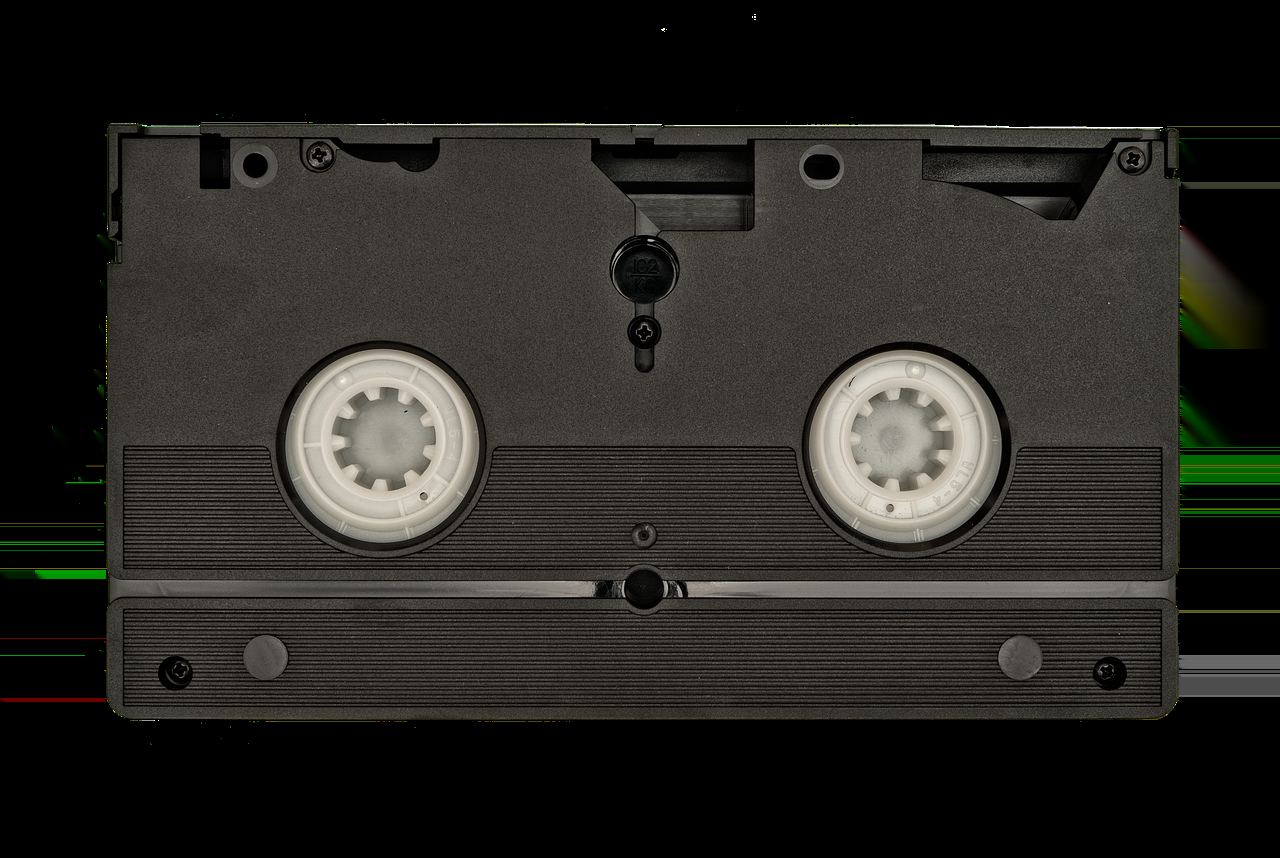
The popularity of VHS was intertwined with video rental: films were released on pre-recorded tapes for home viewing, as Wikipedia’s VHS article describes. A Legacybox history says JVC’s relationships with American motion picture companies helped launch the rental market and gave VHS its edge.
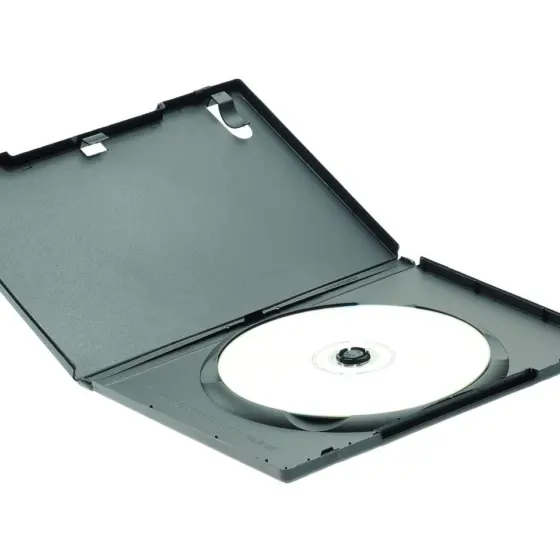
DVD reached American consumers in 1997. It was more compact, had a clearer picture and did not need rewinding. DVD rentals surpassed VHS rentals in the US for the first time in June 2003, though 94.5 million Americans still owned VHS VCRs in 2005, according to the video-transfer company’s history.
Combo VHS/DVD players served as a transitional step, and digital video recorders replaced VCRs for taping television in the 2000s, per Wikipedia’s VHS article. From then on, viewers faced the choice of streaming a film or taking it home on DVD or Blu-ray, as the Legacybox history puts it.
VHS today: a collector’s format
According to Wikipedia’s VHS article, pre-recorded VHS tapes were discontinued in 2006, players officially in 2016 and blank tapes in 2019. The video-transfer company’s 2021 post says the last maker of VHS equipment, Funai of Japan, built its final VCR in July 2016, citing falling sales and a shortage of components (source).
The format has since gained some niche popularity among collectors. The same Wikipedia article says This Is How The World Ends (2026) became the first straight-to-VHS release in 20 years.
Tapes also age. One Legacybox blog post claims the magnetic tape lasts only about 35 years or so, so treat that as a rough warning and check any home movies you care about.
If tapes are about to join your shelves, read how to catalog a movie collection before it grows out of hand. If you would rather build around discs, see how to start a dvd collection.
Frequently asked questions
When did VHS come out?
Show answer
VHS was introduced in Japan on September 9, 1976 and in the United States on August 23, 1977, according to Wikipedia’s VHS article.
Was Betamax better quality than VHS?
Show answer
Slightly, at first. Beta I speed offered roughly 250 lines against 240 for VHS, but Beta II speed dropped it to 240 lines, per the format war article. Its early cassettes also recorded an hour against two on VHS.
When did DVD overtake VHS?
Show answer
In the United States, DVD rentals passed VHS rentals in June 2003, according to a 2021 video-transfer company post.
Is VHS still made?
Show answer
As Wikipedia’s VHS article lists it, pre-recorded tapes were discontinued in 2006, players in 2016 and blank tapes in 2019, though some VHS is still occasionally made. See the article for details.