Wondering how to store books properly without a climate-controlled room? Keep them cool, dry and out of direct light, upright on inert shelving, and away from attics, basements and outside walls. A few cheap habits do most of the work.
This guide is one part of our series on book collecting for beginners.
| Item | Value |
|---|---|
| Recommended temperature (State Library of Queensland) | 19°C–21°C |
| Recommended relative humidity (State Library of Queensland) | 45%–55% |
| Upper limits to avoid exceeding | 23°C and 65% humidity |
| Home-friendly range (Icon) | 16°C–19°C and 45%–60% relative humidity |
| Humidity above which mould and insects can flourish (Icon) | 60% relative humidity |
These figures come from the State Library of Queensland leaflet on books and bound material and Icon’s collections care guide for books. They can change, so check the sources before you rely on them.
What actually damages books on a shelf?
Most books are printed on wood-pulp paper, and the lignin in that pulp reacts with moisture, heat and light. The State Library of Queensland says this makes paper discoloured and brittle, and old paperbacks show it plainly (source).
The usual culprits are easy to list:
- Warmth and damp: warm, humid conditions and poor air circulation encourage mould and insect activity, and boards warp.
- Dryness: paper becomes brittle and weak, and leather bindings may crumble and split.
- Light: it fades inks, dyes, leather and book cloth, and speeds up chemical deterioration.
- Dust and pollutants: soot and similar particles can be greasy and abrasive.
- Handling: for example, pulling a book off the shelf by the top of the spine.
Good news: you control almost all of these with where you put the shelves and how you stand the books on them.
What temperature and humidity should you aim for?
The State Library of Queensland recommends 19°C–21°C and 45%–55% relative humidity, but admits this is very difficult without humidity-controlled air-conditioning. It also says not to exceed 23°C and 65% humidity (source).
Icon suggests 16°C–19°C and 45%–60% relative humidity. If that is hard to reach at home, it advises aiming for a stable environment below 60% relative humidity, because above that mould and insects can flourish (source).
Stability matters as much as the exact number. Without a climate system, you can reduce swings with a few placement choices:
- Keep bookshelves off external walls, which see much greater daily fluctuations in temperature and humidity than internal walls.
- Avoid bathrooms, kitchens and laundries, where there is a high risk of mould growth.
- Stay clear of radiators and damp walls.
- Skip attics, garages and basements, where conditions fluctuate, pests may be a problem, and leaks and floods are relatively common.
Humidity swings hurt in both directions. Icon notes that page edges may cockle if the air is too damp, while books can turn stiff and brittle if it is too dry.
How much light is too much?
All light does some harm, and Icon states that light damage is irreversible (source). Sunlight and fluorescent lights are strong sources of UV and visible light, so keep books away from windows and out from under lamps and overhead lighting.
The Conservation Center for Art & Historic Artifacts gives a storage target of 10–50 lux and warns that light damage is cumulative. It also points out that glass alone does little or nothing to block UV radiation (source).
Practical fixes are low-tech. Block daylight with curtains, shades or plastic filtering films, and turn lights off in rooms nobody is using. Normal incandescent house lights are less harmful than daylight or fluorescent tubes, according to the American Institute for Conservation guide (source).
Which shelves and shelving habits are safest?
The best choice is powder-coated steel or anodised aluminium, neither of which produces harmful by-products. Galvanised steel is a cheap, suitable option as long as it does not become rusty (source).
Wood and wood-based shelving, such as MDF, plywood and chipboard, gives off acidic volatile organic compounds that can degrade leather bindings and discolour text pages. If you must use it, line each shelf with polyester sheeting so books do not touch the wood, and leave a little space behind and between the books. The same leaflet also advises against glass-fronted wooden bookcases, where those fumes can be trapped.
How you stand the books matters too:
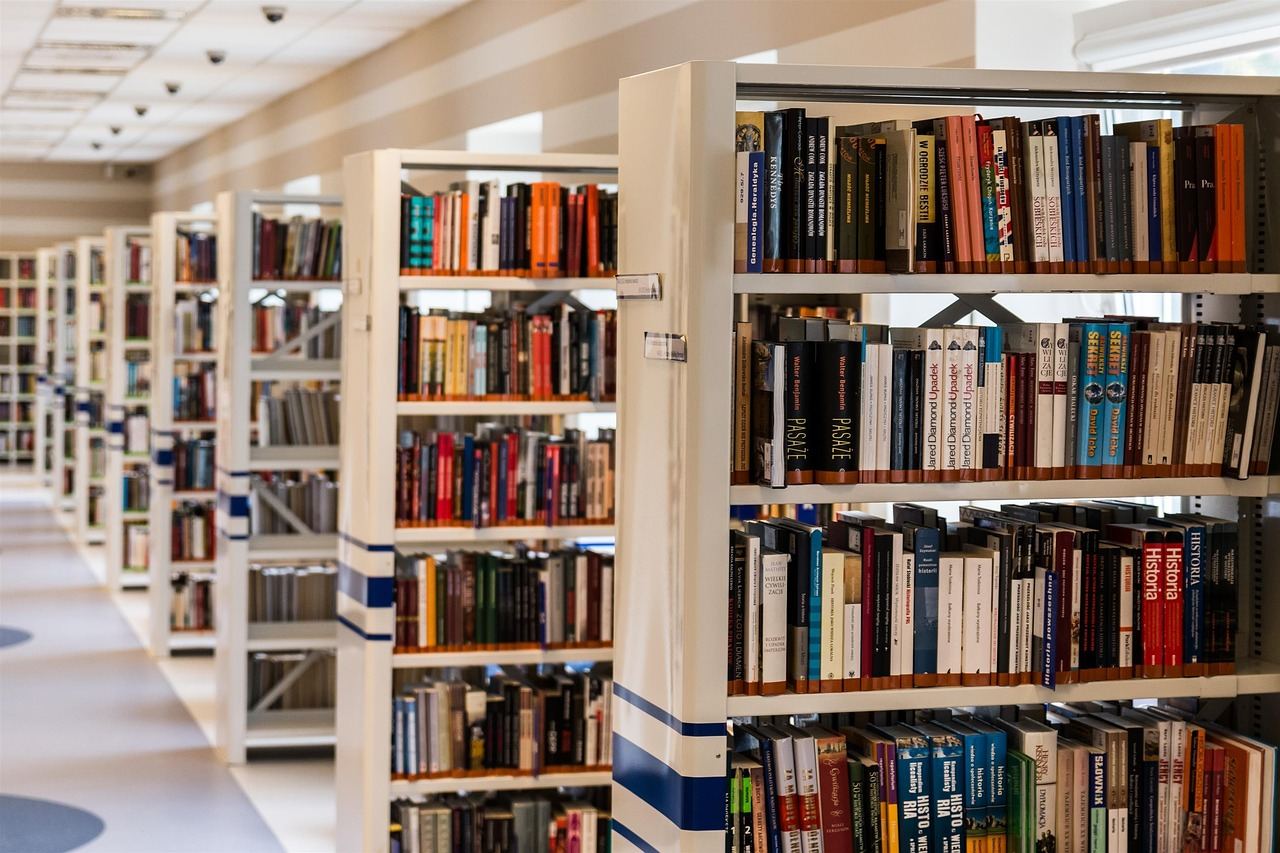
- Keep them vertical without jamming them in tightly, since tight packing stresses them sideways and blocks air circulation.
- Do not let books lean or slant.
- Shelve similarly sized volumes together so they support one another and boards do not warp.
- Use bookends without sharp edges.
- Lay large, oversized books flat in stacks of no more than two or three, per the American Institute for Conservation guide (source).
That guide also warns never to pack or shelve books fore edge down, because it suspends the whole weight of the book from its joints.
How do you deal with dust, pests and handling?
Dust is more than cosmetic. Icon says dust on the top edges of books may lead to discolouration and encourage mould growth (source). Clean regularly and you also get a chance to spot trouble early.
When dusting, wipe from the headcap toward the fore edge with a clean cloth or soft brush, so dirt is not trapped down the spine. A vacuum cleaner can be used with the suction reduced, according to the American Institute for Conservation guide (source).
For pests, the State Library of Queensland suggests sticky insect traps placed strategically to monitor the variety and quantity of insect activity (source). If there is an actual infestation, the American Institute for Conservation advises consulting a conservator.
Handling counts as well. Pull a book out from the middle of the spine rather than the top, and use clean, dry hands to turn pages, because gloves can reduce your sensitivity to delicate paper.
When should you box books or pack them away?
In areas with heavy outdoor pollution, such as busy roads, the State Library of Queensland says valuable books belong in archival storage boxes. If you collect valuable copies, learning how to identify a first edition book helps you decide which ones deserve that protection.
Enclosures should be made from acid-free, lignin-free, alkaline buffered paper or board, or chemically stable plastic such as uncoated polypropylene (source). Poor-quality enclosures can give off acidic by-products that harm the books inside.
If books must be packed away, follow these rules from the American Institute for Conservation guide (source):
- Do not wrap them in household plastics such as kitchen wrap or bin bags, which emit harmful gases as they degrade.
- Leave at least four inches between boxes and the walls, ceilings and floors.
- Keep boxes out of attics, garages and basements.
Once the books are safely housed, how to grade book condition shows you how to record any damage you notice during your regular checks.
Frequently asked questions
Can I store books in a basement or attic?
Show answer
Icon advises avoiding attics, garages and basements, where temperature and humidity fluctuate, pests may be a problem and leaks and floods are relatively common. A spare room with internal walls is a better choice.
Should I wear gloves to handle old books?
Show answer
Icon says gloves are sometimes recommended for bindings, particularly textile ones or those with metal clasps, but they can reduce your sensitivity to delicate paper. For turning pages, it advises clean, dry hands instead.
Is it worth oiling leather bindings?
Show answer
The American Institute for Conservation guide says recent tests found dressings are only cosmetic and do nothing to prolong the life of leather. It advises consulting a conservator before using them.
What do I do with a leather book that is turning powdery?
Show answer
Icon says books with dry, powdery leather can be boxed or wrapped in acid-free paper so they do not mark the volumes around them.