Want beginner craft projects that won’t leave you with a drawer of abandoned supplies? Start with one simple pattern or kit, use the recommended materials and finish it. This guide helps you choose between yarn, thread, paper and beads.
| Item | Value |
|---|---|
| Crafts in one retailer’s beginner guide | Six: knitting, crochet, cross stitch, sewing, quilting and embroidery |
| When crochet first became popular | The 1800s |
| Embroidery essentials named in that guide | Four items: stranded cotton, hoop, invisible marker, scissors |
| Aida counts for sizing a cross stitch | 11, 14, 16 or 18 count |
| Activities a university workbook asks for per project | At least 5 |
These figures come from a craft retailer’s beginner guide and an Ohio State University Extension needlecrafts workbook. Guides get updated, so check the source before you rely on them.
How do you pick your first craft?
Choose the craft you can picture doing on the sofa, not the one that looks most impressive online. A retailer’s guide from Lovecrafts walks through six crafts, namely knitting, crochet, cross stitch, sewing, quilting and embroidery, so you can find the one you will love, as the Lovecrafts beginner guide puts it.
The Ohio State University Extension workbook takes a wider needlecraft view. Its table of contents covers crochet, cross stitch, embroidery, knitting, needle felting and rug making, according to the workbook itself.
A few honest questions narrow the field quickly:
- Do you want something you can pick up and put down, or a project you sit with for an evening?
- Do you enjoy following a chart, or would you rather make it up as you go?
- Would you rather work with fabric and thread, yarn, paper or beads?
- Do you have space to leave a project out, or does it need to fit in a bag?
Whatever you pick, start simple. The Wool Warehouse guide says that even if you take to a hobby quickly, it is always useful to start out with something easy for your first project, because you build skills slowly and gain more reliable muscle memory (Wool Warehouse).
A sensible order for any first project
- Learn the basics. For knitting that means casting on, the knit stitch and the purl stitch; for crochet it means a foundation chain and the double and treble crochet stitches.
- Choose a pattern or a kit. A specific pattern gives you the details you need and builds confidence.
- Use the recommended materials. Your finished piece is then more likely to look the way it is supposed to.
- Finish what you start. Casting off, sewing up and securing thread are skills you only learn by reaching the end.
Yarn crafts: knitting and crochet
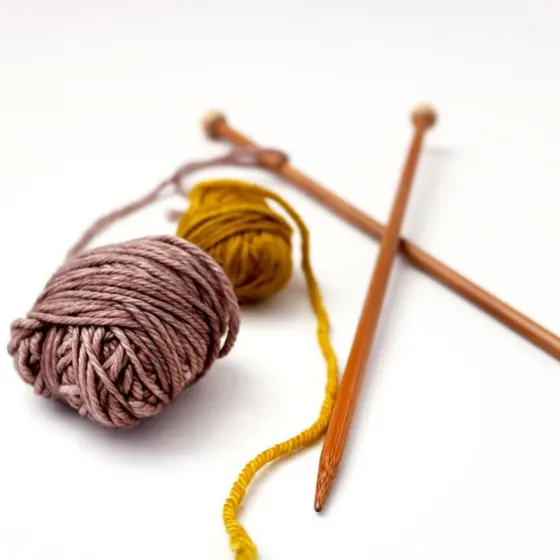
Knitting and crochet both turn one continuous length of yarn into a looped fabric. The difference is the tools: the OSU workbook explains that knitting uses two or more needles holding a number of stitches, while crochet uses only one hook on which a single stitch is formed (Ohio State University Extension).
If knitting appeals, the guide on how to knit for beginners is a good place to learn the first stitches properly. Before you cast on, the Wool Warehouse guide reminds you that you need to know how to cast on and how to do the knit and purl stitches.
Crochet: hooks and yarn
Crochet has a long history. The OSU workbook says it first became popular in the 1800s and that the word comes from the French croc, meaning “a hook”. It is a friendly beginner craft because you only ever manage one live stitch at a time.
Choosing a hook is simpler than it looks. Three rules from the workbook are worth remembering:
- Generally, the coarser the yarn, the larger the hook needed.
- Avoid the inexpensive plastic hooks, as they may have rough edges that will snag on your yarn.
- Follow the recommendations in your pattern for best results.
Why tension matters
If your pattern lists a tension, make a small test square before you commit. The Wool Warehouse guide calls matching tension the most important thing, and says you may need to go up or down a needle size if your square does not match the pattern (Wool Warehouse).
For a first piece, think small and useful. The OSU workbook suggests beginners make a couple of practice projects to get the hang of a technique, and mentions a trivet or potholder as a simple example.
Needle and thread: cross stitch and embroidery
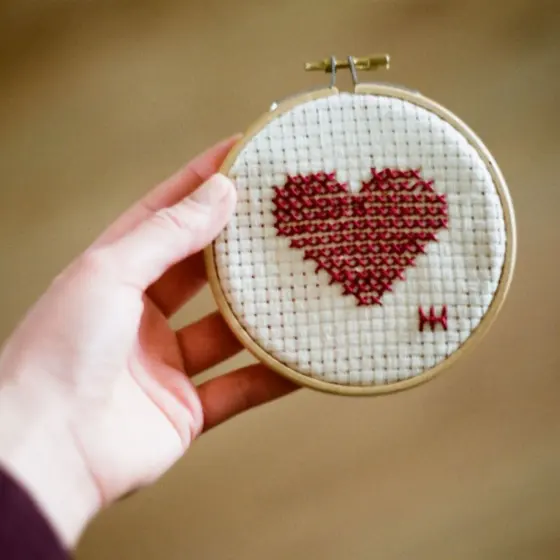
Both crafts use needle, thread and fabric, but they feel different. Cross stitch is counted and tidy, while embroidery gives you more creative freedom, which is why many people try both. The guide on how to start cross stitch covers the first steps in detail.
For cross stitch, the Wool Warehouse guide says you need to know where to begin on your fabric and how to interpret the pattern. It also suggests that a kit is a gentle way in: using the threads and fabric supplied teaches you to match symbols to colours, and gives you enough fabric to finish.
Sizing and fabric
Fabric choice changes how big your finished piece turns out. Lovecrafts publishes a guide to working out your finished cross stitch size on Aida in 11, 14, 16 or 18 count, so check the count on your kit before you assume the finished size (Lovecrafts).
Embroidery essentials
Embroidery asks for very little to begin. The Lovecrafts guide names four essentials: stranded cotton, an embroidery hoop, an invisible marker and scissors.
Once you have those, the next job is learning a small repertoire of stitches. The page on basic embroidery stitches is a sensible companion, and a printed kit takes away the guesswork of choosing colours and designs.
Paper, decorative and bead projects
Not every craft needs a needle. Retailers group paper and bead crafts into kits aimed at beginners: WoodArtSupply, for example, lists scrapbooking and journaling kits, paper quilling kits and bookbinding kits in its catalogue (WoodArtSupply). A kit is a low-risk way to test whether you enjoy the technique.
- Quilling: if you are wondering what is paper quilling, it is the craft of shaping thin strips of paper into small decorative designs.
- Scrapbooking: this is a good fit if you already keep photos and ticket stubs, and the guide to how to start scrapbooking explains how to begin.
- Decoupage: here you decorate an object with paper and a sealing layer, and the walkthrough on how to do decoupage shows the method.
- Beadwork: small pieces add up quickly, and the page on how to make beaded jewelry is a friendly first step.
These crafts reward planning your colours before you start. The OSU workbook suggests looking up a colour wheel and studying how colours go together to plan a colour scheme, advice that works as well for paper and beads as it does for thread.
Supplies, storage and finishing what you start
You do not need to buy everything at once. The Wool Warehouse guide suggests that once you have tried a craft and decided it is for you, you can build up a supply stash, either as patterns call for items or by stocking up in advance.
Its list of useful extras for yarn and needlework includes:
- Stitch markers, stitch holders, cable needles and point protectors
- Pompom makers, a needle gauge and wool or tapestry needles
- Fabric glue, fabric scissors and pins
- A needlework frame or hoop, and different counts and colours of Aida
Keeping a list and a particular bag or area for these items means you are less likely to double up on accessories or lose the smaller ones. For storage ideas, read about how to organize craft supplies once your collection starts to grow.
A simple planning habit
The OSU workbook offers a neat habit: list your tools and supplies in two columns, “On hand” and “Need to Purchase/Borrow”. It also suggests saving receipts so you can see what you have spent.
Keep going when it gets dull
Most first projects hit a flat patch halfway. The Wool Warehouse guide admits this happens to everyone, but says the best way to learn when you are just beginning is to see your projects through to the end, so you practise parts like casting off and securing thread.
It also encourages beginners to find support, whether a relative who crafts, a local group or an online forum. The OSU workbook adds that everyone learns differently, so try having someone show you, watching a video or following pictures in a book.
When a craft turns into a collection
Handmade projects often lead to collecting: pattern books, magazines, vintage tools and finished pieces. If the printed page is what draws you, book collecting for beginners covers how to get started.
If your tastes lean towards the screen, film collecting for beginners offers a similar introduction. Either way, the Wool Warehouse guide’s closing reminder applies: it is about the process, not just the product.
Frequently asked questions
What is the easiest beginner craft?
Show answer
There is no single answer, because it depends on what you enjoy. The sources agree on the approach: start with something simple, and the Ohio State University Extension workbook suggests a trivet or potholder as a practice project.
Should I buy a kit or follow a pattern?
Show answer
Either works. A pattern gives you the details you need, while a kit supplies the right threads and fabric so the finished design looks like the picture on the front.
Which crochet hook should I use?
Show answer
Follow your pattern first. As a general rule, the coarser the yarn, the larger the hook needed, and the OSU workbook advises avoiding inexpensive plastic hooks that may snag your yarn.
What if I get bored halfway through?
Show answer
That happens to everyone. Try to push through, because finishing teaches skills such as casting off, sewing up and securing thread that you will need in later projects.
Do I need a class to learn?
Show answer
No. Video tutorials, books, a friend who crafts, a local group or an online forum can all help, and it is worth choosing the method that suits how you learn.